Clinical trials · Real-world evidence · Epidemiology

Biostatistics and evidence generation, from trials to national registers.

Frameshift designs and runs studies for pharmaceutical, biotech and research organisations: clinical trials, registry-based real-world evidence, and the epidemiological and statistical work underneath both. Studies in the Danish national registers are our deepest area.

Capabilities

What we generate.

Three areas of work. The data source changes between them; the standard for designing a study does not.

Clinical trials

The statistician's half of a trial.

We write the analysis plan, run the primary and secondary analyses, and draft the methods and results for the paper.

Trial work →

Biostatistics & epidemiology

The methods work underneath both.

We design cohort and case-control studies, run survival, competing-risks and causal-inference analyses, and work in statistical genetics and prediction modelling.

Selected work →

Real-world evidence and registry studies

The six questions clients bring us most often.

01

Disease Epidemiology & Burden

Establish the size and shape of the patient population.

We quantify incidence, prevalence, survival, disease trajectories and healthcare use across the whole national population carrying the diagnosis, so the figures describe routine care.

02

Treatment Patterns & Patient Journeys

What actually happens after diagnosis.

We reconstruct treatment initiation, sequencing, switching, adherence and persistence from prescription and hospital records, and show the pathways patients follow over years of routine care.

04

External Control Arms

Give a single-arm study something to compare against.

We build comparator and natural-history cohorts from registry data, applying your trial's own eligibility criteria and follow-up windows so the control arm is drawn from patients who would have qualified for it.

05

Post-Authorisation Safety & Effectiveness

After launch, in the patients who were never enrolled.

We design and analyse post-authorisation safety and effectiveness studies (PASS), following the treated population for as long as the registers run, usually years past the trial's database lock. Where the study is a regulatory commitment, the protocol is written to GVP Module VIII and registered in the EU PAS Register.

06

Feasibility & Data Strategy

Find out whether the question can be answered at all.

We establish which registers hold the variables you need, how complete they are, what sample size is achievable and which design is realistic, before anyone commits to a full study.

The data environment

Why Danish registry data?

Denmark has recorded every hospital admission since 1977 and every prescription filled at a pharmacy since 1995, linked to diagnoses, cancer data, causes of death and socioeconomic information through a personal identifier issued at birth or on immigration and used for life. The other Nordic countries hold comparable registers, so a design developed here can often be extended, where the question warrants it and the approvals allow.

Nationwide longitudinal cohorts

Study complete or near-complete national populations, followed across years or decades, with emigration and death almost the only routes out of the cohort.

Linkable health data

The Civil Registration System links parents to children, and the same identifier links health records to education and income data. That is what makes sibling-matched and within-family designs possible.

The registers by name

The National Patient Register, the National Prescription Register, the Danish Cancer Register, the Register of Causes of Death, and Statistics Denmark's education and income data, all linked on the same identifier.

Access and authorisation

Frameshift holds its own authorisation to work with Danish national register data, so we execute registry studies directly inside the approved Danish data environment. Individual studies still require project-level approval, and we tell you at scoping what that adds to the timeline.

Clinical trials

Trial statistics, end to end.

We run the statistics on clinical trials: design and sample size, statistical analysis plans, primary and secondary analyses, reporting and publication.

Prespecification is not optional

Estimands, endpoints and analysis populations are settled before the data are examined. In a trial the protocol forces that on you; in a registry study, usually nothing does. We hold registry studies to the same rule anyway.

Every engagement on our record is a trial

All three of the client engagements we have delivered are randomised trials, published in NEJM Evidence, the International Wound Journal and Wound Repair and Regeneration. The analyses we led are there to read.

Both, on the same project

Trial and registry work often answer neighbouring questions for the same programme. We take on either, and say which one the question actually needs.

Track record

Selected work.

Registry and population-based studies from our team, alongside randomised trials, genetic epidemiology and clinical prediction work, and client engagements where we led the statistics. The published record is heaviest in haematology and cancer.

See all →
npj Aging2026
National cancer burden

Disentangling shifting demographic and treatment effects on years of life lost to cancer in Denmark

Nationwide decomposition separating demographic change from treatment progress in years of life lost to cancer across Denmark.

View Article →
Clinical Epidemiology2025
Registry data resource

The Danish Lymphoid Cancer Research (DALY-CARE) Data Resource: The Basis for Developing Data-Driven Hematology

A nationwide Danish data resource linking lymphoid cancer diagnoses, treatment and outcomes across national health registers for research use.

View Article →
The Lancet Obstetrics, Gynaecology, & Women's Health2026
Cohort and genetic epidemiology

Epidemiological and genetic evidence for shared mechanisms between migraine and pre-eclampsia

Nationwide Danish cohort and genetic risk score study finding shared aetiological pathways between migraine and pre-eclampsia, with implications for cardiovascular risk stratification.

View Article →
HemaSphere2026
Clinical prediction modelling

Machine learning enhances risk stratification and treatment failure prediction in diffuse large B-cell lymphoma

Machine-learning models that sharpen risk stratification and predict treatment failure in diffuse large B-cell lymphoma from routine clinical data.

View Article →
JAMA Network Open2024
Population-based cohort

Exclusive Breastfeeding Duration and Risk of Childhood Cancers

Nationwide Danish cohort linking routinely collected health data to examine breastfeeding duration and subsequent childhood cancer risk.

View Article →
HemaSphere2025
Treatment patterns

Polypharmacy independently predicts survival, hospitalization, and infections in patients with lymphoid cancer

Registry-linked prescription and hospital data used to quantify how concurrent medication burden predicts survival, admissions and infection risk.

View Article →
+54 more studies →

Why Frameshift

Design before data.

A study is only as good as its design. In a trial that means the endpoints, the estimands and the analysis populations are fixed before anyone sees the data; in a registry study it means eligibility, time zero, exposure and comparators are fixed on the same terms. No amount of sample size fixes a cohort defined wrong, a time zero that leaks information from the future, or an endpoint chosen after someone has seen the curves.

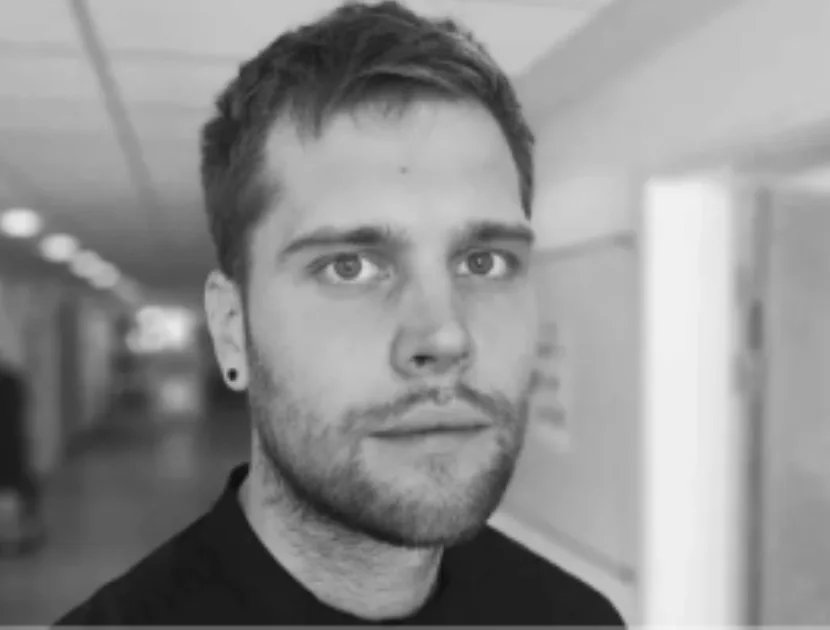
Ólafur B. Davíðsson

Ólafur B. Davíðsson

Co-Founder & Lead Biostatistician

Statistical epidemiologist with a PhD from the University of Copenhagen. He trained in statistical genetics at deCODE genetics and held research posts at Statens Serum Institut and the Danish Cancer Institute before co-founding Frameshift. He has led the statistical work on randomised clinical trials, nationwide Danish registry studies and genetic epidemiology, including research published in NEJM Evidence, the British Journal of Cancer and The Lancet Obstetrics, Gynaecology & Women's Health. At Frameshift he leads study design, analysis strategy, statistical programming and reporting.

Ragnar P. Kristjánsson

Ragnar P. Kristjánsson

Co-Founder & Managing Director

Statistical geneticist with a PhD in immunology and infectious diseases from the University of Copenhagen. He spent nearly a decade at deCODE genetics working on large-scale human genetics, with further experience in cancer epidemiology at the Danish Cancer Institute, spanning gene discovery, population cohorts and registry-based research. At Frameshift he leads the practice and works on study design, genetic and observational analyses, and turning complex biomedical questions into tractable statistical ones.

Mikkel Werling

Mikkel Werling

Computational Methods Lead

He works on machine learning and computational analysis for clinical and health research, built on a background in software engineering and data science. His published work spans machine-learning models for clinical risk prediction and the assembly of research-ready health-data infrastructure from real-world records. At Frameshift he leads computational and machine-learning work, bringing model development and validation to problems where standard statistical methods fall short.

How we work

Epidemiology before analysis

Bias, timing and comparability decide whether a result means anything, in a trial or in a register. We settle the design questions first, and say plainly what the data can and cannot support.

The designer is the analyst

Whoever designs a study writes its analysis and drafts its methods section. Questions about why an estimate moved go to the person who produced it.

Feasibility to manuscript

A study runs from the feasibility read through cohort and endpoint definitions to the analysis and the write-up. Tables, figures and methods text are delivered in the state they need to be in for a submission.

Prespecified, then checked

The analysis plan is signed off before outcome data are examined. Primary results are independently checked by a second team member, and any deviation from the plan is logged and reported alongside the findings.

Frameshift Insights

From the team.

Methodological essays on epidemiology, biostatistics and study design.

See all posts →

Sun Exposure, Skin Cancer, and a Methodological Sunburn

A 2013 Danish register study found that skin cancer patients had half the all-cause mortality of the general population. Swap the diagnosis for a lottery prize and the same design manufactures the same survival advantage, because the exposure is defined by having lived long enough to receive it.

Get in touch

Planning a trial
or a registry study?

We are most useful when you already have the question and need the design, the statistics or the reporting behind it, whether the data come from a randomised trial or from the national registers. Tell us what you are trying to establish and we will usually reply the same or next working day.

1 15–20 min scoping call 2 Feasibility read, in writing 3 Proposal
info@frameshift.dk

This form is processed by Formspree. Your name, email, and message are forwarded to us and stored by Formspree until deleted. Formspree does not sell or share your data. See our privacy policy. Please do not include confidential or patient-level data in an initial enquiry.